
DigiCareCloud®
A FHIR-native community diagnostics platform, built to NHS standards and ready to pilot.
- FHIR R4
- The record itself, not a wrapper over a legacy schema
- DICOMweb
- Community imaging, linked to the patient record
- UK-only
- Production data residency and DR
A community diagnostics platform that unifies wearables, point-of-care imaging, clinical alerts and a shared patient record on Microsoft Cloud for Healthcare. Built standards-first for virtual wards, remote monitoring, community diagnostics and care homes, with community maternity as the first pathway built on top of it.
The Challenge
Community care and virtual ward programmes generate data across dozens of disconnected sources. Vitals live in one device dashboard, imaging in another and notes in a third. Escalation runs on email and pager rather than workflow, and handover loses information every time it changes hands. A virtual ward only scales when the clinical team trusts both the data and the handover, and neither is true when the record is scattered.
Community diagnostics makes that harder before it makes it better. Handheld ultrasound and point-of-care imaging move diagnosis out of the acute hospital, but the images have nowhere structured to live, clinicians cannot compare serial scans against the same patient, and acute EPRs do not easily ingest imaging captured in the community.
The Approach
FHIR R4 is the record itself rather than a translation layer bolted onto something else: observations, conditions and tasks are modelled and exposed as FHIR resources, coded in SNOMED CT with LOINC for observations and dm+d for medicines, against version-controlled value sets. Legacy device and system integrations arrive over HL7 v2 where FHIR is not available and are normalised to FHIR on ingest, so the record stays consistent no matter what fed it.
Imaging follows the full DICOM standard including DICOMweb, and every study is linked to the patient’s FHIR record through ImagingStudy. That is what makes serial-scan comparison possible against one longitudinal record, and what lets imaging export cleanly to an acute EPR when a patient escalates. Around that record sit continuous vital-sign ingest from community wearables, patches and home devices, clinician-configurable alert thresholds with role-based escalation ladders, and audit-trailed handover between the care home team, the community nurse and the visiting GP.
The assurance position is stated plainly rather than implied. The platform is aligned to NHS DTAC across clinical safety, data protection, technical assurance, interoperability and usability; all production data stays in UK Azure regions with UK region-pair backup and DR; traffic is TLS 1.2+ in transit and AES-256 at rest; and IHE ATNA audit logging makes every view, change and access traceable. DSPT submission is in progress, Digiovations holds Cyber Essentials Plus across the whole organisation, and ISO 27001 is on the roadmap rather than claimed as held.
Maternity: the first pathway
The first pathway built on the platform is community maternity. Pregnant women are seen intermittently by community midwives, with weeks of unmonitored time between appointments. Vital sign trends, early indicators of hypertensive disorders and signs of deteriorating perinatal mental health all go uncaptured in those gaps, and observations taken in the community rarely reach secondary care maternity systems in structured, usable form.
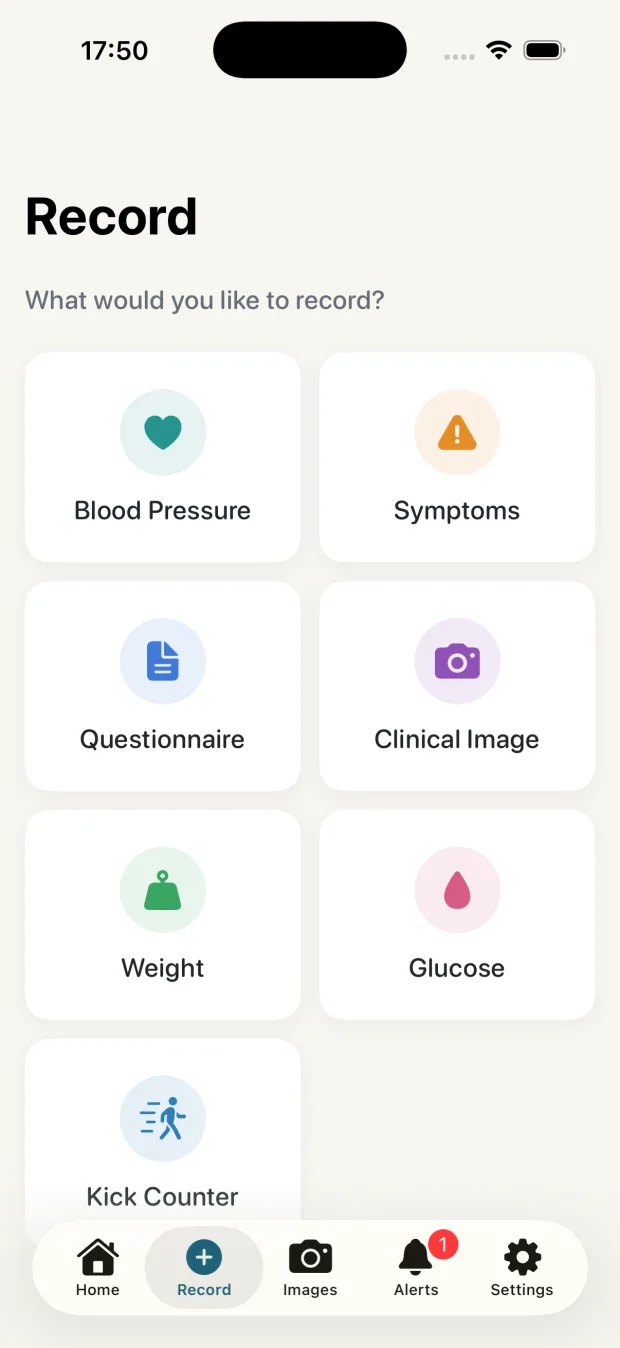
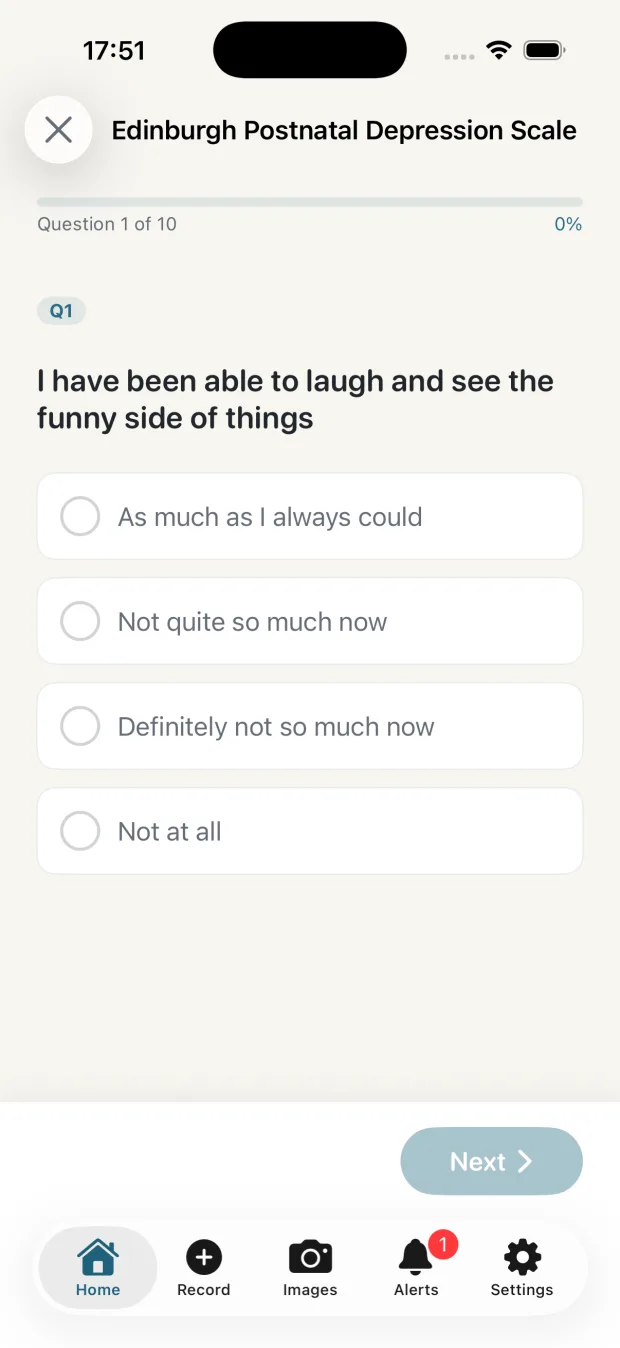
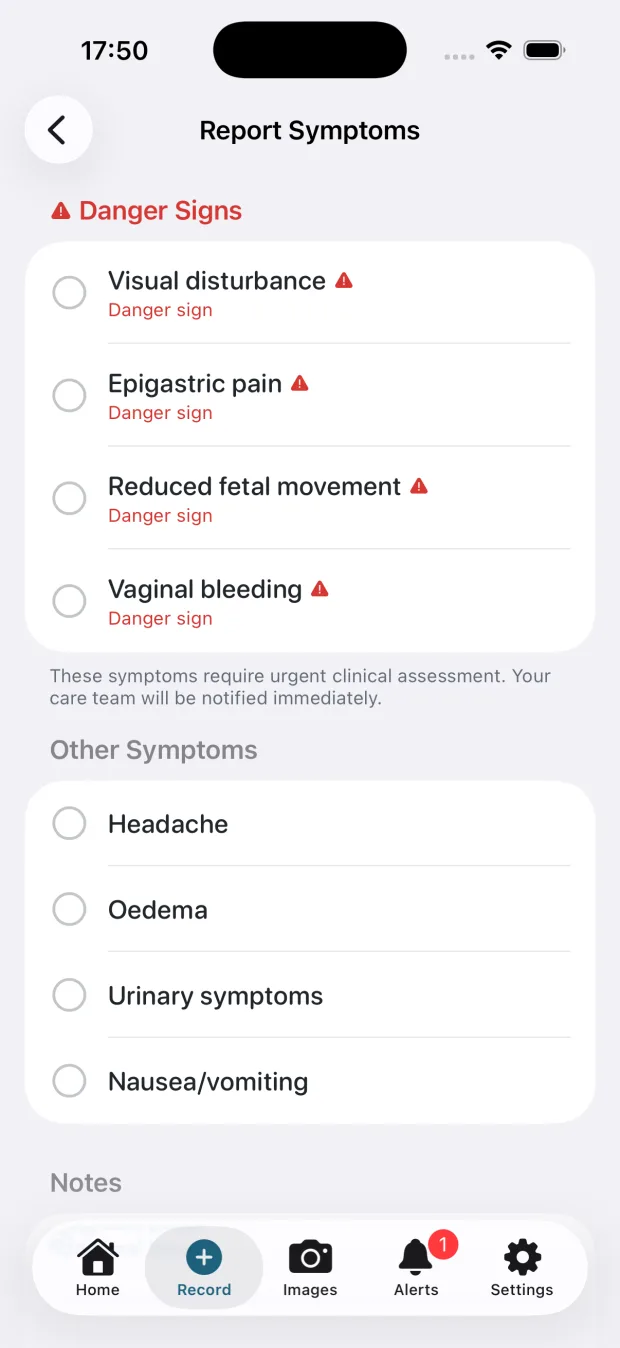
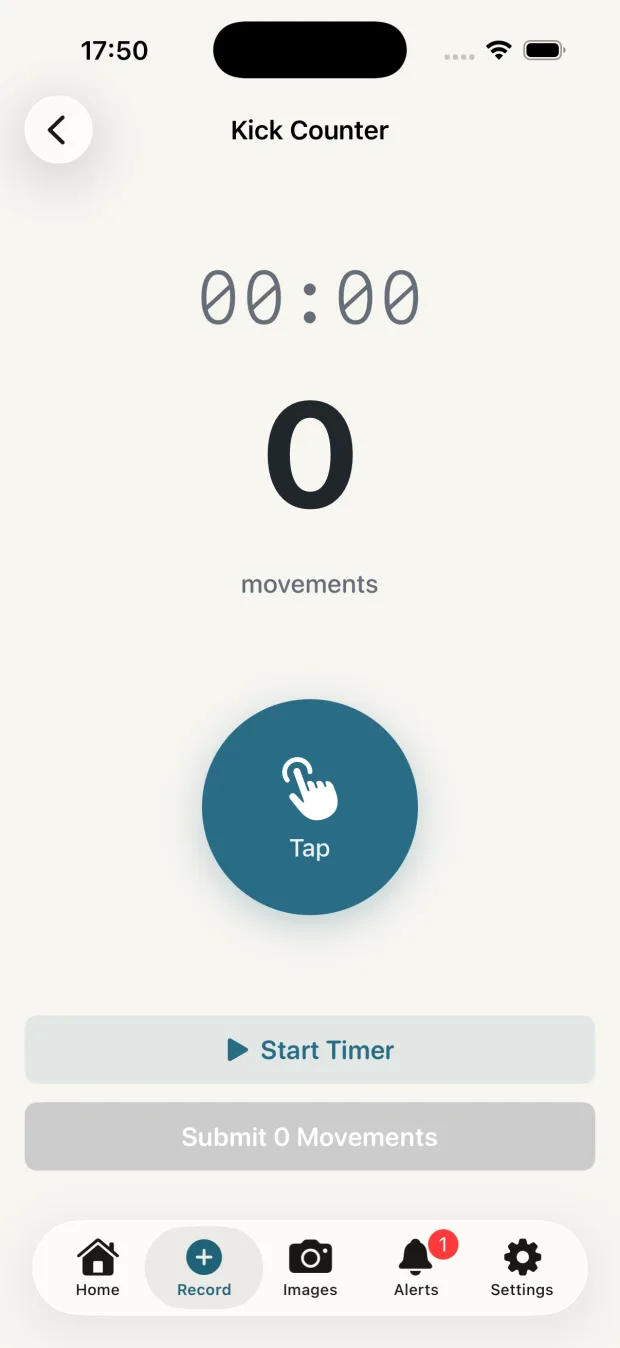
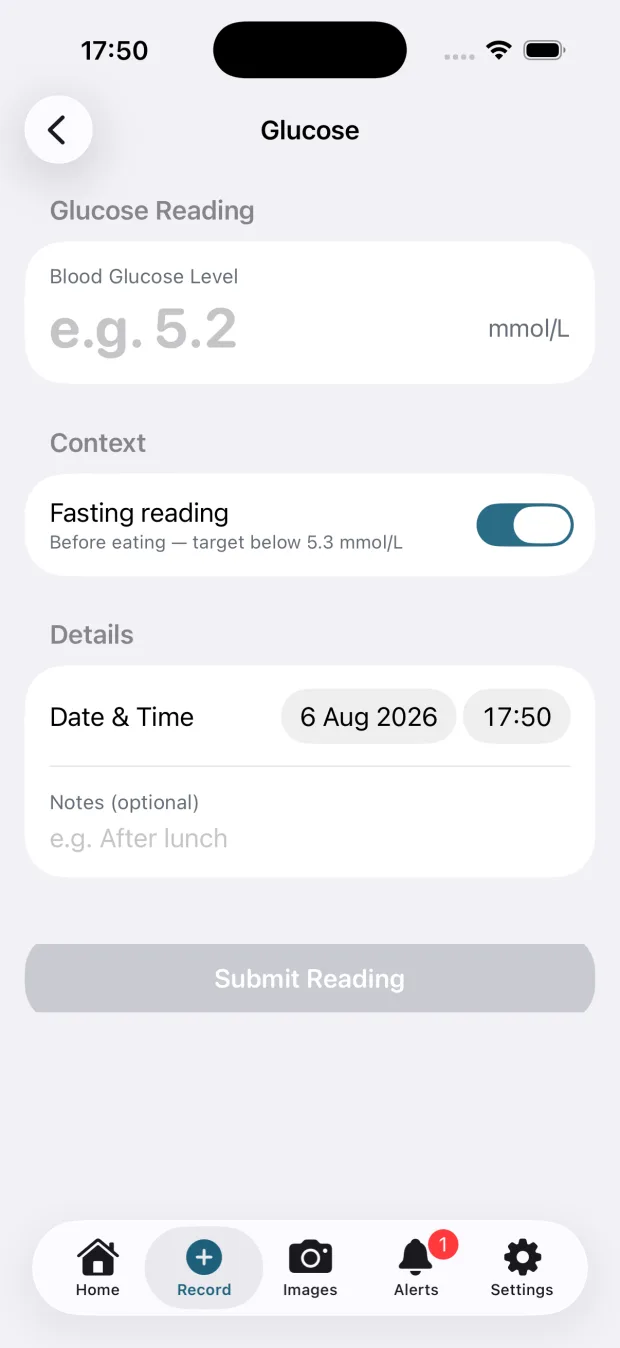
DigiCareCloud Maternity pairs a patient iOS app with the clinician portal. The app syncs consumer wearables through HealthKit, delivers EPDS and GAD-7 mental health screening on schedule with scoring, and takes structured self-reporting: blood pressure, blood glucose, weight, fetal movements through a kick counter, and SNOMED-coded symptoms such as reduced fetal movement or visual disturbance. Every reading is written as a FHIR R4 resource against the active maternity episode, each action leaves a FHIR AuditEvent, and the app works offline and syncs when connectivity returns.
On the clinician side, a rule-based risk engine scores fifteen signals into a red, amber or green status per patient, so a midwife triages a caseload rather than reading charts one at a time, and a threshold breach raises a prioritised alert before the next appointment rather than after it. That scoring is deliberately deterministic rather than predictive: thresholds derive from published NICE guidance, stay configurable so a service approves its own values before use, and every alert traces back to a stated rule a clinician can inspect and change.
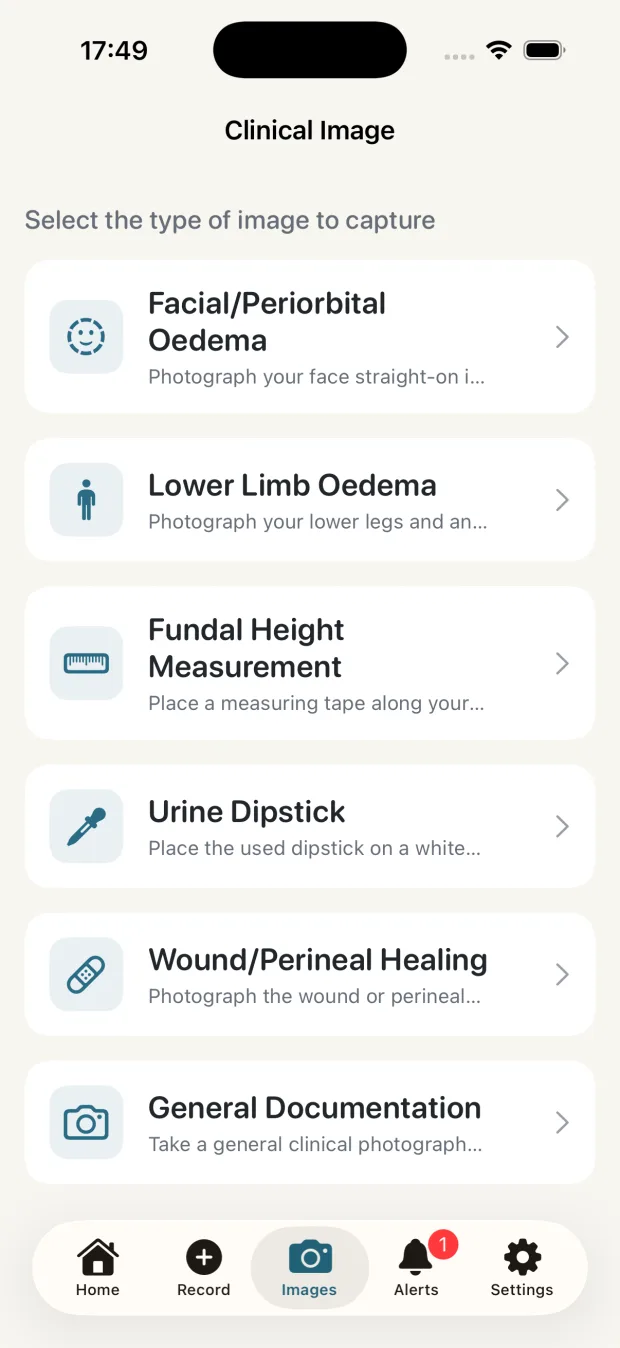
The only AI in the pathway is image analysis. Clinical images captured on the phone are processed on device and stored as DICOM with their measurements in a Structured Report, and no AI-generated measurement is treated as authoritative: each one lands in a clinician review queue to be accepted, annotated or rejected.
Three pathways are in scope for the first release: perinatal mental health, gestational hypertension and pre-eclampsia, and gestational diabetes risk. The app is in build, and like the wider platform it is pre-pilot. We are looking for community midwifery teams to evaluate it, not claiming outcomes we have not measured.
What we’ve built
- FHIR R4-native patient record, not a FHIR wrapper over a legacy schema
- SNOMED CT, LOINC and dm+d coding, with HL7 v2 normalised to FHIR on ingest
- Full DICOM including DICOMweb, each study linked to the patient via FHIR ImagingStudy
- Continuous vital-sign ingest from community wearables, patches and home devices
- Clinician-configurable alert thresholds with role-based escalation ladders
- Maternity patient app: wearable sync, EPDS and GAD-7 screening, kick counter, symptom reporting
- Rule-based fifteen-signal risk engine driving red/amber/green caseload triage for midwives
- On-device AI image analysis stored as DICOM SR, with every measurement held for clinician review
- Digital NEWS2 scoring and automatic escalation for care home residents
- IHE ATNA audit logging, so every view, change and access is traceable
- UK-only data residency on Microsoft Cloud for Healthcare, aligned to NHS DTAC
Inside the maternity app
Healthcare / NHS
Looking for a community diagnostics platform to pilot?
DigiCareCloud is ready to evaluate in real NHS pathways: a 12-week structured pilot against a defined cohort, and a joint evaluation report that is honest about what worked.